

Entering the online corridors of slots casino spinfest, gamblers often are drawn to the bright lights of slots, yet the table games section offers a different kind of promise. These are the games where skill and decision-making really shift the odds, turning a pastime into a pursuit of mastery. The best strategy for table games at Spinfest Casino is not a one secret trick but a multi-layered approach merging mathematical fundamentals, disciplined bankroll management, and a thorough understanding of the exact rule variations on offer. From the multi-hand blackjack tables to the immersive roulette wheels and baccarat pits, each game presents a special puzzle. This guide breaks down those puzzles step by step, providing a practical roadmap for players who want to move beyond guesswork and engage with the platform’s classic card and wheel games with genuine confidence and a organized plan.
Bankroll Handling as a Core Strategic Foundation
No examination of table game strategy is comprehensive without disciplined bankroll management, the approach that differentiates a sustainable hobby from a rapid path to exhaustion. Even a player implementing perfect basic strategy in blackjack or consistently backing the Banker in baccarat will go broke if their stake sizing is irresponsible. The core rule is to regard the gambling bankroll as a dedicated, finite entertainment fund, completely isolated from essential living expenses. At Spinfest Casino, a strategic player begins a session with a fixed loss limit and a win goal, and they have the iron discipline to uphold both. A popular and successful approach is the session bankroll method, where a player allocates only a small percentage, perhaps 5% to 10%, of their total bankroll to any single sitting, ensuring that a bad run of variance cannot wipe them out in one go.
The unit size is the basic building block. A unit should equal a small fraction of the session bankroll, usually between 1% and 2%. For a session bankroll of £200, a conservative unit would be £2 to £4. This sizing enables the player to endure the inevitable negative swings built into the mathematics of every table game. In blackjack, the unit system also aids strategic doubling down and splitting, as the player will sometimes need to allocate multiple units to a single high-advantage hand without the stake becoming unduly large. A common pitfall is the “scared money” phenomenon, where a player bets too large a percentage of their funds and becomes emotionally compromised, unable to make the correct strategic decision. Proper unit sizing keeps the mind focused and the strategy solid. Discipline around payment methods can reinforce these boundaries, perhaps by placing a specific amount onto an e-wallet for a week’s play and rejecting impulsive deposits when that balance is gone.
Mastering Essential Blackjack Strategy
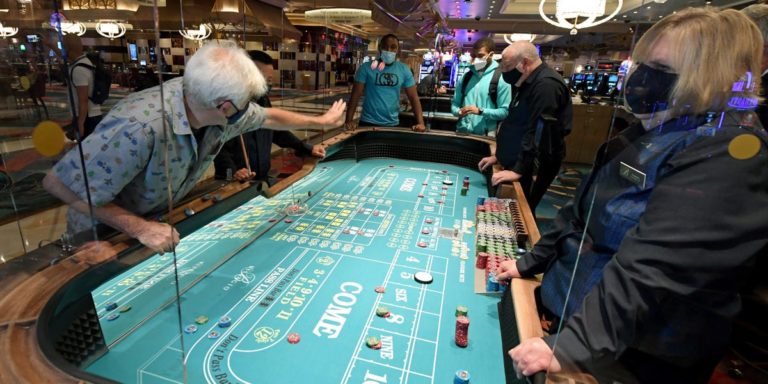
Blackjack stands alone as the table game where player decisions most significantly impact the outcome, making it the premier proving ground for strategic play at Spinfest Casino. The cornerstone is the basic strategy chart, a mathematically derived set of rules governing the optimal play for every possible player hand against every dealer upcard. This is not a system of hunches; it is the result of billions of simulated hands, determining the decision that minimizes losses or maximizes gains over time. The chart tells a player precisely when to hit, stand, double down, split pairs, or surrender, and deviating from it nearly always increases the house edge. Memorizing this chart is a essential first step for anyone who wants to sit at a blackjack table with serious intent. The logic is straightforward once broken down: always stand on a hard 17 or higher, always hit a hard 11 or lower, and exploit the dealer’s weak cards.
Against a dealer’s 4, 5, or 6, which are statistically likely to lead to a bust, the strategy often calls for standing on stiff hands like 12 through 16, pushing the dealer to take the risk. Doubling down on a 10 or 11 against those weak cards is another high-leverage move, exploiting on a strong position to get more money on the table when the odds are favourable. Soft hands, those containing an Ace valued as 11, add complexity. A soft 18 against a dealer’s 9, 10, or Ace is a classic example where the chart recommends hitting, a move that feels counterintuitive but is mathematically correct because standing makes the hand a long-term loser. Splitting pairs is equally rule-bound: always split Aces and Eights, never split Tens and Fives. Players at Spinfest can drill these decisions in free-play mode until they become automatic, removing hesitation and emotional decision-making so each session becomes a disciplined execution of a proven framework.
Roulette Tactics Beyond the Martingale

Roulette’s spinning wheel is commonly regarded as pure chance, but a sophisticated betting strategy can still influence the risk and reward framework of a session at Spinfest Casino. The most famous, and most hazardous, approach is the Martingale system, where a player increases twofold their even-money bet after each loss. The appealing logic is that a win will eventually recover all previous losses and yield a small profit. The devastating flaw is the mix of table limits and finite bankrolls. A losing streak of only seven or eight spins drives the required stake into astronomically high territory, often hitting the table’s maximum bet limit and eliminating the player’s funds before the recovery win can take place. The Martingale transforms small, frequent wins into a strong likelihood of a devastating, bankroll-ending loss, and no strategic player should trust it.
A more enduring approach centers on managing volatility rather than hunting losses. The D’Alembert system, a negative progression with a considerably steadier curve, boosts the even-money bet by one unit after a loss and lowers it by one unit after a win. It presumes wins and losses will generally equalize and provides a organized, low-stress framework for a longer session without the severe swings of the Martingale. Another tactical consideration is bet composition. Setting a combination of inside and outside bets can create broad wheel coverage while focusing on specific sectors for higher payouts, combining the steady pace of column bets with the thrill of a straight-up number. The most crucial roulette tactic at Spinfest, however, continues to be the unwavering pursuit of the single-zero European wheel. If French variants with “la partage” or “en prison” rules are offered, the house edge on even-money bets drops to just 1.35%, making any double-zero American wheel a clear contradiction of sound strategy.
Baccarat game and the Banker Bet Strategy
Baccarat offers a unique strategic landscape because, unlike blackjack, the player makes no decisions about how the hand is conducted after the wager is set. The game operates on fixed drawing rules, removing away the notion of control and revealing the mathematical reality bare. The entire strategy at Spinfest Casino therefore reduces into a simple, powerful rule: the disciplined, unwavering commitment to the Banker bet. This is not myth; it is a cold mathematical truth. The Banker hand wins slightly more often than the Player hand due to drawing rules that benefit its position. After calculating for the standard 5% commission on winning Banker bets, the house edge rests at approximately 1.06%, rendering it one of the most favourable wagers in the entire casino. The Player bet carries a house edge of around 1.24%, a small discrepancy that compounds over hundreds of hands to steadily deplete a bankroll faster.
The true strategic flaw in baccarat is the Tie bet, which entices players with its attractive 8:1 or 9:1 payout. The house edge on the Tie bet is devastating, frequently soaring above 14%. A strategic player regards the Tie bet as if it does not exist, refusing to be swayed by a large payout that hides an abysmal probability of winning. The entire framework is an practice in restraint: select the bet with the lowest house edge and repeat it mechanically, disregarding the human desire for variety. Scorecard tracking, where players diligently record outcomes, is a psychological comfort device with no mathematical effect on future hands. Each hand is an independent occurrence, and patterns like the “Dragon Tail” are retrospective illusions. The strategic player may observe the scorecard for entertainment but will never alter their bet selection based on a perceived streak. The discipline is to put the Banker bet, settle the commission, and repeat, a monotony that is the cost of the lowest house edge.
Comprehending the House Edge and Rules Variations
Ahead of putting down a single chip, a calculated player must absorb the house edge, the mathematical advantage the casino holds in every game. This percentage denotes the mean gross profit the casino anticipates from every wager over the long run. At Spinfest Casino, certified random number generators assure theoretical return-to-player rates stay accurate over millions of hands. The critical insight remains that the house edge is not fixed; it fluctuates significantly depending on rule sets. A blackjack game offering 3:2 for a natural carries a vastly lower edge than one paying 6:5, and a single-zero roulette wheel nearly halves the casino’s advantage compared to a double-zero variant. Table selection, therefore, turns into the first strategic act. A player who clicks the first available blackjack seat without examining rules gives up a percentage of potential return ahead of the cards get dealt.
The practical application commences with actively searching for the most advantageous conditions in the Spinfest lobby. Prefer European Roulette rather than American Roulette when feasible, as the single zero cuts the house edge from roughly 5.26% to 2.70%. In blackjack, rules such as the dealer staying on soft 17, the ability to double down after splitting, and late surrender all erode the advantage, bringing the game nearer to a near-even proposition when used alongside correct basic strategy. Understanding that the edge is a variable, not a constant, forms the groundwork for all other table game tactics are developed. Apart from headline rules, subtle variations in side bet offerings also influence the strategic landscape. Side bets such as Perfect Pairs or announced roulette wagers frequently have a house edge surpassing 10%, turning them into rare, small-stake entertainment rather than a core part of a mathematically sound plan.
Optimizing Platform Tools and Live Dealer Play
A full table game strategy at Spinfest Casino reaches beyond the felt and into the intelligent utilization of the platform’s own features. The welcome offer and ongoing promotions, while subject to terms, can supply additional funds that effectively lower personal financial exposure. A strategic player examines the terms meticulously, devoting close attention to wagering requirements, game contribution percentages, and time limits. Table games often amount to a much lower percentage to wagering than slots, sometimes as little as 10% or even 0%, so comprehending this nuance prevents the frustration of finding a bonus cannot be unlocked through the preferred game. The strategy is to view a bonus not as free money, but as a conditional tool that can lengthen playtime if the terms match with the player’s habits. The technological infrastructure is another asset: a reliable, licensed platform secures fair, audited random number generators, the bedrock upon which all mathematical strategy is built.
Mobile compatibility is a practical consideration. A player who has learned a blackjack strategy chart needs the interface to be reactive and clear on a smartphone or tablet, allowing accurate, error-free decisions without mis-taps. Testing the platform on a selected device ensures the layout of bet buttons and card displays facilitates, rather than hinders, decision-making. The strategic player also uses account history and responsible gaming tools as a core part of their approach. Regularly reviewing transaction and game history provides an factual, data-driven look at actual performance, stripping away the emotional memory of a near miss. Deposit limits, session reminders, and time-out features systematize the discipline of bankroll management, removing the need for a moment of willpower in the heat of a losing streak.
When transitioning from digital RNG tables to the live dealer environment, the mathematical foundations remain the same, but the operational tempo and human elements introduce new variables. The most immediate change is the slower, natural pace of a live dealer game, which reduces the number of hands per hour and thus the theoretical loss over the same time period. A strategic player can use this extra time to verify a blackjack decision or recalculate their bankroll position. The chat function and history boards present in live lobbies can create social pressure, but the strategic player remains resistant, anchored to immutable math rather than the crowd’s mood. The presence of a real dealer and physical wheel can, however, provide psychological reassurance for those who find digital RNG opaque. A critical practical consideration is table limits, which are often higher in the live dealer lobby due to operational costs. A player with a modest bankroll must verify that the minimum bet aligns with their unit size, opting for the lowest viable live limit or sticking with digital tables until the bankroll comfortably supports the higher stakes.
FAQ
What is the single most important rule to check at a blackjack table?
The payoff for a natural blackjack is the most critical rule. A table paying 3:2 for a blackjack has a significantly lower house edge than one paying 6:5. The 6:5 payout dramatically increases the casino’s advantage, making the game far less favourable for the player. A strategic player should always verify this rule in the game’s information section before sitting down and should actively avoid 6:5 tables whenever a 3:2 alternative is available in the lobby.
For what reason is the Tie bet considered a poor strategic choice in baccarat?
The Tie bet carries an exceptionally high house edge, often exceeding 14%, despite its attractive 8:1 or 9:1 payout. This means that for every £100 wagered on the Tie, the theoretical loss is over £14, compared to just over £1 on the Banker bet. The probability of a tie occurring is very low, and the payout does not adequately compensate for the risk. A disciplined strategy treats the Tie bet as a non-existent option.
Can a betting system like the Martingale overcome the house edge in roulette?
No betting system can overcome the inherent mathematical house edge in roulette. The Martingale system, which uses doubling bets after losses, does not affect the probability of the next spin. Its main drawback is that a long losing streak will swiftly hit the table’s maximum bet limit or exhaust the player’s bankroll, leading to a catastrophic loss that erases all previous small gains. The house edge remains constant regardless of the bet size.
How can a player locate the specific rules for a table game at Spinfest Casino?
Nearly all digital and live dealer games at Spinfest Casino include an information or help icon, often represented by an “i” or a question mark, located within the game interface. Clicking this will display a detailed screen detailing the specific paytable, rule variations, and payout odds for that particular table. Examining this information before playing is an essential first step for any strategic player to make sure the rules align with their optimal play strategy.
What constitutes a sensible unit size for a bankroll management strategy?
An appropriate unit size for bankroll management usually falls between 1% to 5% of the total bankroll. This strategy aids in minimizing risk while allowing for extended playing sessions. Users should pick a unit size that suits their comfort level and entire bankroll amount.
A prudent and sensible unit size is usually between 1% and 2% of a player’s total session bankroll. For a session budget of £200, this would mean betting units of £2 to £4 per hand or spin. This structure provides a solid buffer to absorb the natural negative variance of table games without risking a rapid depletion of funds. It also permits strategic moves like doubling down in blackjack without the stake becoming uncomfortably large.
Are the approaches for digital RNG table games the same as for live dealer games?
The core mathematical strategies, such as basic strategy in blackjack or always betting on the Banker in baccarat, are identical for both digital RNG and live dealer versions. The primary differences are operational: live games run at a slower pace, which can be helpful, and often have higher minimum table limits. The strategic player applies the same fundamental principles but adjusts their table selection to match their bankroll and preferred speed of play.
How exactly do wagering requirements affect a table game bonus strategy?
Wagering requirements determine how many times a bonus amount must be wagered before winnings can be withdrawn. Crucially, table games often contribute a much lower percentage to these requirements than slots, sometimes only 10% or even 0%. A strategic player must review the bonus terms to see the game weighting, as playing blackjack or roulette might make it practically impossible to fulfill the bonus within the time limit, rendering the offer unsuitable for a table game focus.